
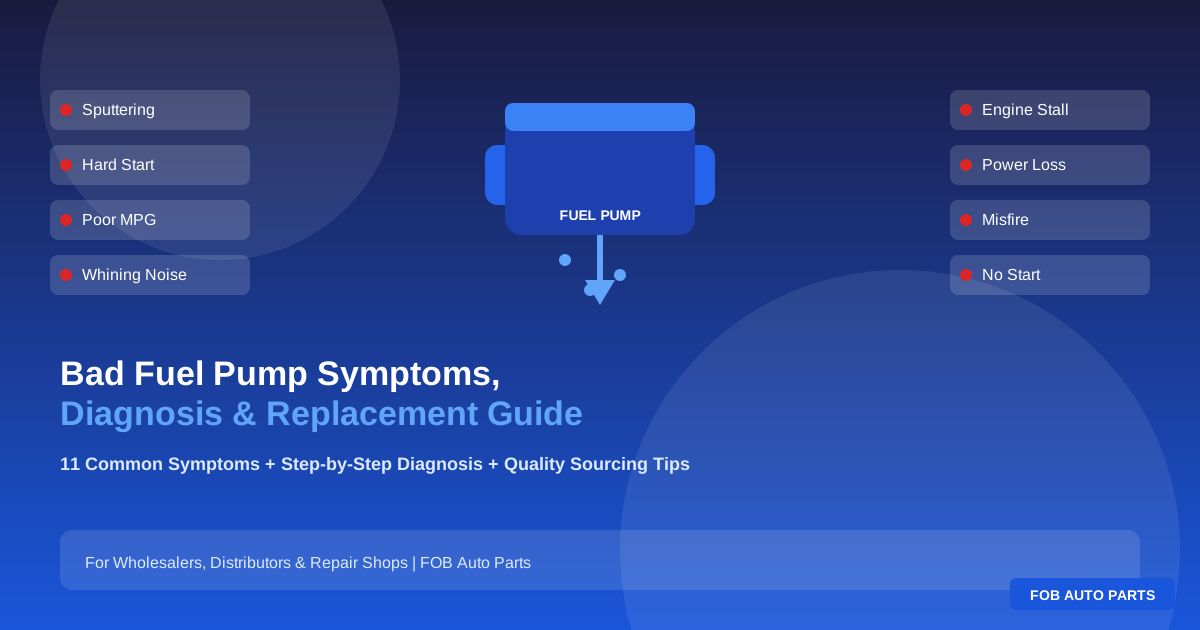
The fuel pump is the heart of a vehicle's fuel delivery system, responsible for moving pressurized gasoline or diesel from the tank to the engine. For repair shops, parts retailers, and wholesale distributors, fuel pump failures represent consistent, high-volume demand - fuel pumps rank among the most replaced wear parts in light-duty vehicles, with millions of units sold annually in the North American aftermarket alone.
For your business, this means two things: first, being able to quickly identify fuel pump failure symptoms helps your customers and reduces diagnostic time. Second, sourcing high-quality, reliable replacement fuel pumps directly impacts your reputation, return rates, and long-term profitability. This guide covers everything you need to know, from recognizing failure signs to selecting a trusted wholesale fuel pump supplier.
1. 11 Common Bad Fuel Pump Symptoms to Watch For
Fuel pump failure rarely happens without warning. Recognizing these common symptoms helps identify problems early, preventing costly tows and engine damage:
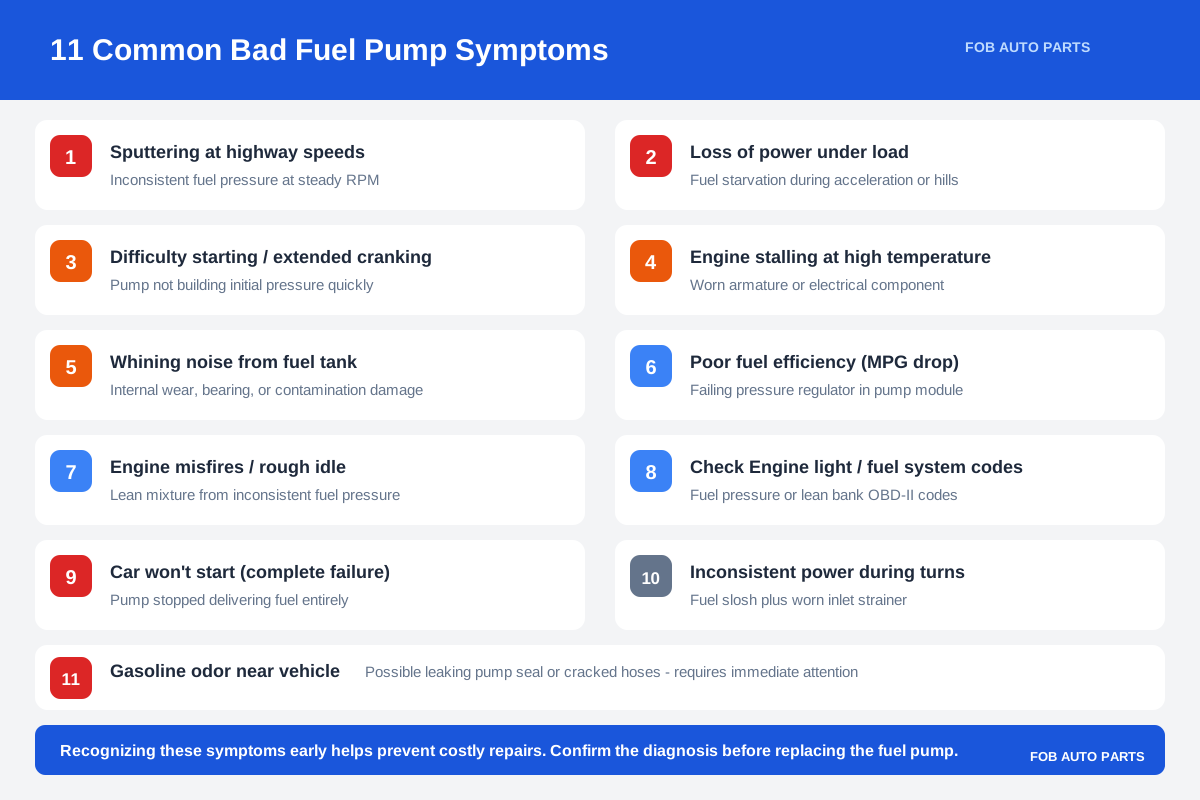
- Sputtering or surging at highway speeds - The most classic sign. The engine runs smoothly for several miles, then suddenly sputters or jerks before returning to normal. This happens when the pump can no longer deliver consistent fuel pressure at steady RPMs.
- Loss of power under load or acceleration - When climbing hills, towing, or accelerating hard, the engine feels starved for fuel and struggles to produce power. Fuel demand increases, but the failing pump cannot keep up.
- Difficulty starting (extended cranking) - Even if the engine eventually turns over, repeated extended cranking before start-up means the pump is no longer building initial pressure quickly enough. This is often one of the earliest warning signs.
- Engine stalling at high temperatures - If the engine consistently stalls when it reaches operating temperature (and restarts after cooling down), this frequently points to a worn pump armature or failing electrical component inside the pump assembly.
- Whining or humming noise from the fuel tank - A healthy fuel pump makes a quiet, steady hum when priming. Loud whining, grinding, or buzzing noises from the tank area indicate internal wear, bearing failure, or contamination damage.
- Poor fuel efficiency - A failing fuel pressure regulator built into the pump module can cause too much or too little fuel delivery, leading to a noticeable drop in MPG.
- Engine misfires and rough idle - Inconsistent fuel pressure causes lean air/fuel mixtures, resulting in rough idle, misfires, and hesitation when pressing the accelerator.
- "Check Engine" light with fuel system codes - OBD-II codes P0087 (fuel rail pressure too low), P0171/P0174 (lean bank conditions), or P0230-P0233 (fuel pump circuit issues) often point to fuel pump problems.
- Car won't start at all (complete failure) - If the pump stops working entirely, the engine will crank normally but never start, as no fuel reaches the combustion chamber. This typically happens after the above symptoms have been ignored.
- Inconsistent power during turns - Sloshing fuel in the tank combined with a worn pump inlet strainer can cause temporary fuel starvation during sharp turns.
- Gasoline odor near the vehicle - Leaks in the fuel pump assembly seal or cracked hoses on the module can cause fuel odors and create a serious fire hazard - this requires immediate attention.
2. How to Properly Diagnose a Failing Fuel Pump (Step-by-Step)
Before replacing any fuel pump, proper diagnosis saves comebacks and unnecessary part returns:
Step 1: Perform a fuel pressure test. Connect a fuel pressure gauge to the Schrader valve on the fuel rail (or use an adapter for returnless systems). Compare your reading against manufacturer specifications. Typical operating pressure for port-injected engines is 30-65 PSI; direct injection systems run much higher. Pressure that drops more than 5-10 PSI within 20 minutes of shutoff indicates a faulty check valve in the pump assembly.
Step 2: Check fuel volume delivery. Pressure alone is not enough - the pump must deliver adequate volume. A healthy pump should deliver about 1 quart (1 liter) of fuel in 30 seconds or less. Low volume with correct pressure means a restricted filter or worn pumping elements.
Step 3: Test electrical supply. Before condemning the pump, verify it is receiving proper voltage. Check the fuel pump fuse, relay, wiring harness, and ground connections. A voltage drop of more than 0.5V on the power or ground circuit means the problem is electrical, not the pump itself.
Step 4: Inspect the fuel filter and strainer. A clogged fuel filter or inlet strainer creates identical symptoms to a failed pump. Always inspect these components first - replacing the pump without addressing a restricted filter will result in premature failure of the new pump.
Step 5: Check for contamination. Water, debris, or old degraded gasoline in the tank will damage any new pump quickly. Inspect the tank interior when replacing the pump module.
3. What Causes Premature Fuel Pump Failure?
Understanding failure causes helps you advise customers on prevention and evaluate pump quality:
- Running the tank consistently below 1/4 full - The fuel pump relies on gasoline for cooling and lubrication. Running on near-empty repeatedly causes overheating and accelerates wear.
- Contaminated fuel - Dirt, rust, water, or degraded gasoline damages internal pump components and clogs filters.
- Electrical issues - Voltage fluctuations, corroded connectors, or a failing fuel pump relay cause inconsistent operation.
- Clogged fuel filters - Restricted filters force the pump to work harder, increasing wear and motor burnout.
- Substandard manufacturing quality - Cheap aftermarket pumps with poor materials, loose tolerances, and inferior armature winding typically fail within 6-12 months, compared to many years for quality units.
4. OEM vs Aftermarket Fuel Pumps: What's the Difference?
There is a common misconception that OEM parts are always higher quality. This is not necessarily true for fuel pumps - many OEM pumps are manufactured by the same Tier 1 suppliers that produce quality aftermarket units. The difference lies in manufacturing standards and quality control:
- OEM dealer fuel pumps: Typically expensive (2-3x aftermarket price), branded with the vehicle logo, and backed by the automaker warranty. Quality is consistent, but you pay a significant premium for branding.
- Premium aftermarket fuel pumps: Manufactured to meet or exceed OEM specifications using the same materials and tolerances, offered at 50-70% lower prices. Reliable aftermarket brands match OEM durability and performance.
- Cheap economy aftermarket pumps: Cut corners on materials (brushed instead of brushless motors, thinner wiring, lower-quality seals), leading to high return rates and premature failure. These cost more in the long run due to comebacks and warranty claims.
For wholesale distributors and repair shops, premium aftermarket fuel pumps represent the best balance of quality, margin, and reliability for your customers.
5. 7 Quality Checks for a Reliable Aftermarket Fuel Pump
When evaluating fuel pump suppliers and inventory, look for these quality markers:
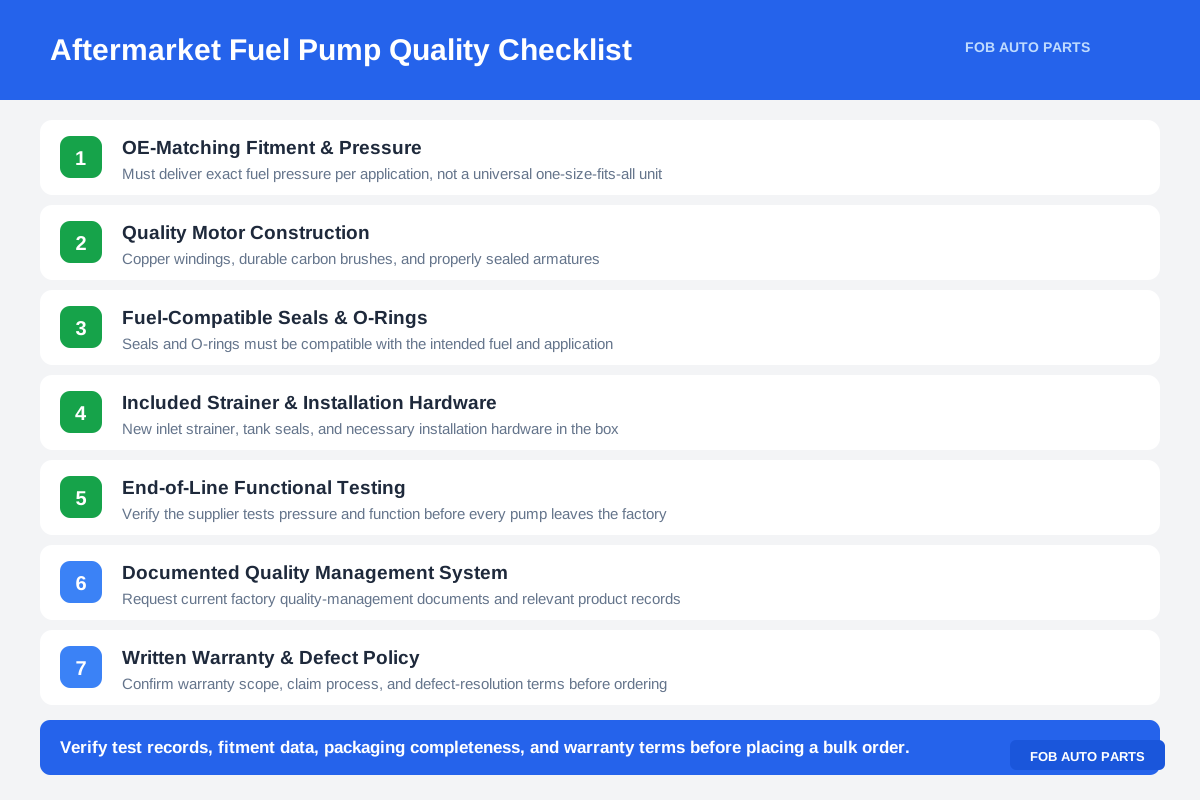
- OE-matching fitment and pressure ratings - The pump must deliver the exact fuel pressure specified for each application, not a "universal" one-size-fits-all unit.
- Quality motor construction - Look for copper windings, durable carbon brushes (or brushless designs for modern applications), and properly sealed armatures.
- EPDM rubber seals and O-rings - Cheap nitrile seals degrade quickly in modern ethanol-blended fuels, causing leaks and pressure loss.
- Included strainer and installation hardware - Quality pump assemblies come with new inlet strainers, tank seals, and necessary hardware.
- 100% end-of-line testing - Reputable manufacturers pressure-test every pump before it leaves the factory.
- IATF 16949 or ISO 9001 certification - Certification confirms the factory follows automotive-quality management standards.
- Warranty coverage of at least 12 months - Suppliers that offer longer warranties stand behind their products.
6. Sourcing Fuel Pumps in Bulk: A Guide for Importers & Wholesalers
For businesses sourcing fuel pumps at wholesale volumes, selecting the right China-based fuel pump supplier offers significant margin advantages while maintaining quality:
- Verify application coverage: Look for a supplier that offers broad coverage for popular makes and models - Japanese (Toyota, Honda, Nissan), Korean (Hyundai, Kia), American (Ford, GM, Chrysler), and European (Volkswagen, BMW, Mercedes-Benz) applications move fastest in most markets.
- Ask for OE cross-reference data: Quality suppliers maintain complete electronic catalogs with OE number interchange, vehicle fitment data, and product specifications.
- Confirm packaging options: For private label customers, professional suppliers offer custom branded packaging, barcoding, and labeling to support your brand.
- Test samples first: Always place a small sample order covering 5-10 high-volume SKUs before committing to large bulk purchases. Test fitment, pressure output, and construction quality.
- Inquire about quality control processes: Ask about incoming material inspection, in-production testing, and pre-shipment random inspection protocols.
- Evaluate lead times and MOQ flexibility: Reliable suppliers maintain stock for fast-moving SKUs and offer reasonable MOQ (typically 50-100 pieces per SKU for aftermarket pumps).
For more on vetting a supplier, see our guide on how to choose a reliable Chinese auto parts supplier.
7. Fuel Pump Installation Best Practices
To ensure long pump life and reduce comebacks:
- Always replace the inlet strainer when installing a new pump (it should be included with quality pump assemblies).
- Thoroughly clean the fuel tank if there is visible contamination, rust, or debris.
- Replace the fuel filter when servicing the pump - a clogged filter is the number one cause of premature new pump failure.
- Use new sealing gaskets/O-rings and lubricate them lightly with silicone grease (never oil or petroleum jelly, which degrades rubber).
- Prime the pump by turning the ignition to the "on" position for 2-3 seconds before cranking, repeated 2-3 times.
- Verify fuel pressure after installation and check for leaks before returning the vehicle to service.
- Advise customers to avoid running the tank below 1/4 full regularly to extend pump life.
Frequently Asked Questions
How many miles does a fuel pump typically last?
A quality fuel pump should last 100,000-150,000 miles (160,000-240,000 km) under normal driving conditions with proper maintenance. Cheap aftermarket pumps may fail in as little as 10,000-20,000 miles.
Can a fuel pump fail suddenly without warning?
Complete sudden failure can happen, but it is rare. In most cases, drivers will notice the symptoms listed above for days or weeks before total failure. The number one cause of "sudden" failure is ignoring early warning signs.
Is it better to replace just the pump or the entire module assembly?
For modern returnless fuel systems, replacing the complete module assembly (including pump, strainer, pressure regulator, and level sender) is recommended for reliability. On older vehicles with separate pump-and-hanger designs, replacing just the pump motor is acceptable if other components are in good condition.
How much does a fuel pump replacement cost for repair shop customers?
For most light-duty vehicles, repair shops charge $400-$900 total (parts + labor) for fuel pump replacement. Aftermarket fuel pump parts typically wholesale for $50-$150, with OEM dealer parts costing $200-$500.
Can I mix fuel pump brands within my inventory?
Yes. It is good practice to carry both a premium aftermarket line for quality-conscious customers and an economy line for price-sensitive buyers, but be transparent about quality differences with customers to avoid comebacks.
Source Premium Aftermarket Fuel Pumps Wholesale from FOB Auto Parts
FOB Auto Parts is a specialized manufacturer and wholesale supplier of high-quality aftermarket fuel pumps, with coverage for popular vehicle applications across Japanese, Korean, American, and European makes. Our fuel pumps are 100% end-of-line pressure tested, manufactured in IATF 16949 certified facilities, and backed by warranty coverage.
We offer competitive wholesale pricing with margin protection for distributors, a complete OE cross-reference catalog with fitment data, private label and custom packaging options, and flexible MOQ. Send us your OE number list, target vehicle applications, quantities, and destination country for a detailed quotation.
Request a Fuel Pump Catalog & Price List