
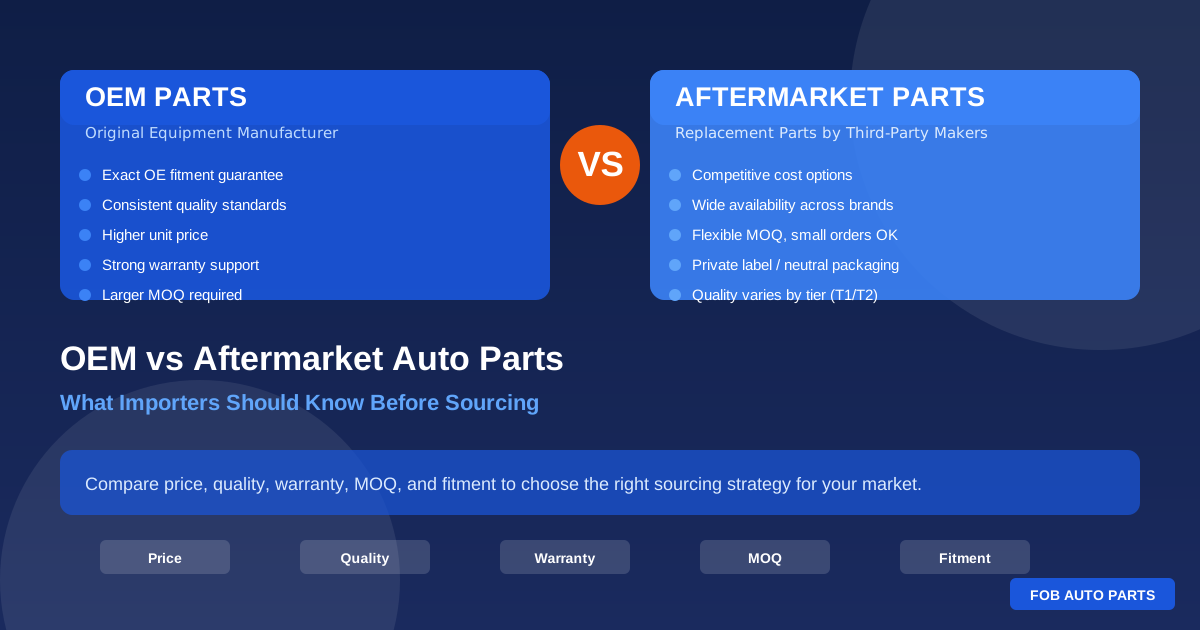
When you source auto parts from China, one of the first decisions you face is whether to buy OEM or aftermarket. The choice affects your pricing, margins, quality risk, and how your customers perceive the parts you sell.
This guide explains the practical differences between OEM and aftermarket auto parts, when each option makes sense, and what to verify before placing an order. Whether you are an importer, wholesaler, or distributor, the goal is the same: source the right part at the right quality level for your market.
1. What Does OEM Mean?
OEM stands for Original Equipment Manufacturer. In the auto parts industry, OEM parts are made to the same specifications as the parts originally installed on the vehicle. They may carry the vehicle manufacturer's brand, or they may be produced by the same supplier that made the original component and sold under that supplier's own label.
Key characteristics of OEM auto parts:
- Exact fitment: Designed for specific make, model, year, and engine variant.
- Consistent quality: Manufactured to the vehicle maker's approved standards.
- Higher price: Brand recognition and tighter tolerances increase unit cost.
- Stricter MOQ: OEM programs often require larger volumes or longer lead times.
- Documentation: Usually supplied with OE numbers, certifications, and traceability.
OEM parts are the safest choice when your customer expects original quality - for example, warranty repairs, fleet maintenance, or premium service centers.
2. What Does Aftermarket Mean?
Aftermarket parts are replacement parts made by companies other than the original vehicle manufacturer. They are designed to fit and function like the original part, often at a lower price. The aftermarket is large and diverse, ranging from premium Tier 1 manufacturers to low-cost producers.
Key characteristics of aftermarket auto parts:
- Cost advantage: Typically 20 to 60% lower than OEM equivalents.
- Wide availability: Many options for older or high-volume vehicles.
- Variable quality: Quality ranges from OE-equivalent to below standard.
- Flexible MOQ: Smaller minimum orders are often possible.
- Brand opportunities: Neutral or private-label packaging is common.
Aftermarket parts work well when price competitiveness matters more than original branding - for example, general repair shops, independent retailers, and cost-conscious distributors.
3. OEM vs Aftermarket: Side-by-Side Comparison
The right choice depends on your market, your customer base, and the specific part category. Use this comparison as a starting point:
| Factor | OEM Parts | Aftermarket Parts |
|---|---|---|
| Price | Higher | Lower, often 20 to 60% less |
| Quality consistency | Very consistent | Varies by manufacturer |
| Fitment accuracy | Exact match | Usually correct; must verify |
| Warranty | Strong, often 12 to 24 months | Varies; confirm before ordering |
| MOQ | Higher | More flexible |
| Lead time | Longer for non-stock items | Often shorter |
| Branding | OEM or original supplier brand | Neutral, own brand, or aftermarket brand |
| Best for | Warranty work, fleet, premium markets | Price-sensitive, competitive retail |
4. When to Choose OEM Auto Parts
Choose OEM when:
- Your customers require original-equipment quality, such as authorized service centers or fleet operators.
- The part category is safety-critical or complex - for example, engine management components, fuel injectors, or advanced sensors.
- You need strong warranty support from the manufacturer.
- You are building a reputation around premium or guaranteed-fit parts.
- Your market has strict import or homologation rules that favor OEM documentation.
5. When to Choose Aftermarket Auto Parts
Choose aftermarket when:
- Price is the main buying factor for your customers.
- The part is a common wear item - brake pads, filters, body parts, suspension arms, etc.
- You want flexibility to build your own brand with private-label packaging.
- You need faster turnaround or smaller test orders.
- You have verified the supplier's quality process and can trust the product tier.
6. Quality Check: Not All Aftermarket Is Equal
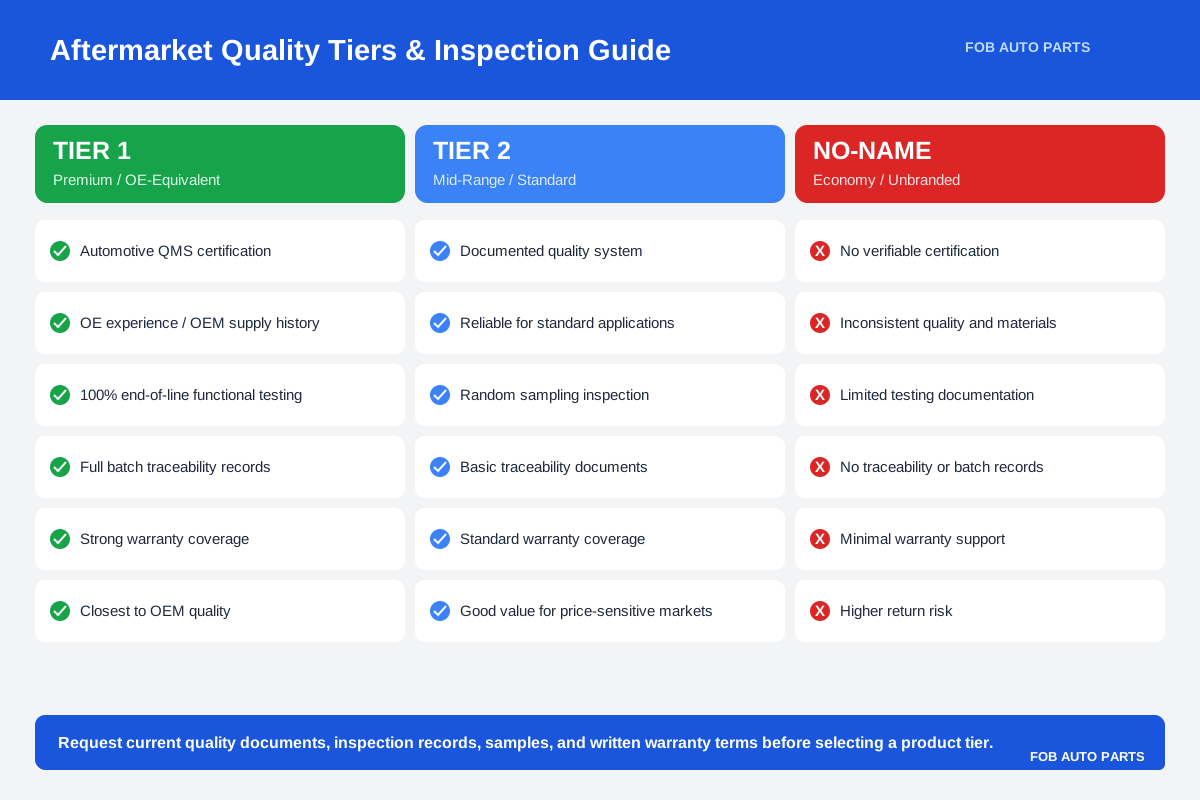
The biggest risk in aftermarket sourcing is inconsistent quality. Aftermarket parts generally fall into three tiers:
- Tier 1: Made by established suppliers with OE experience, IATF 16949 / ISO certification, and documented testing. Quality is often close to OEM.
- Tier 2: Mid-range manufacturers with acceptable quality for standard applications. Good for price-sensitive markets.
- No-name / unbranded: Lowest price, but inconsistent quality and limited support. High risk for importers.
Before ordering aftermarket parts, ask your supplier:
- Who is the manufacturer?
- What certifications does the factory hold?
- Is there pre-shipment inspection?
- What is the defect rate and return policy?
- Can you provide samples for comparison?
At FOB Auto Parts, we classify products by quality tier and share inspection records so buyers can choose the right level for their market.
7. Fitment and OE Number Accuracy
Whether you choose OEM or aftermarket, fitment data must be correct. A mismatch in OE number, vehicle application, or engine variant leads to returns, complaints, and lost customers.
Before production, confirm:
- The exact OE or reference number for the target vehicle.
- Make, model, year range, engine code, and transmission type.
- Whether the aftermarket part replaces multiple OE numbers.
- That the supplier cross-references your OE numbers against their catalog.
A professional OEM auto parts supplier or aftermarket auto parts supplier should verify fitment in writing before quoting. If a supplier cannot match OE numbers accurately, that is a warning sign regardless of price. Request an OE number cross-reference from our team before your next order.
8. Importer's Decision Checklist
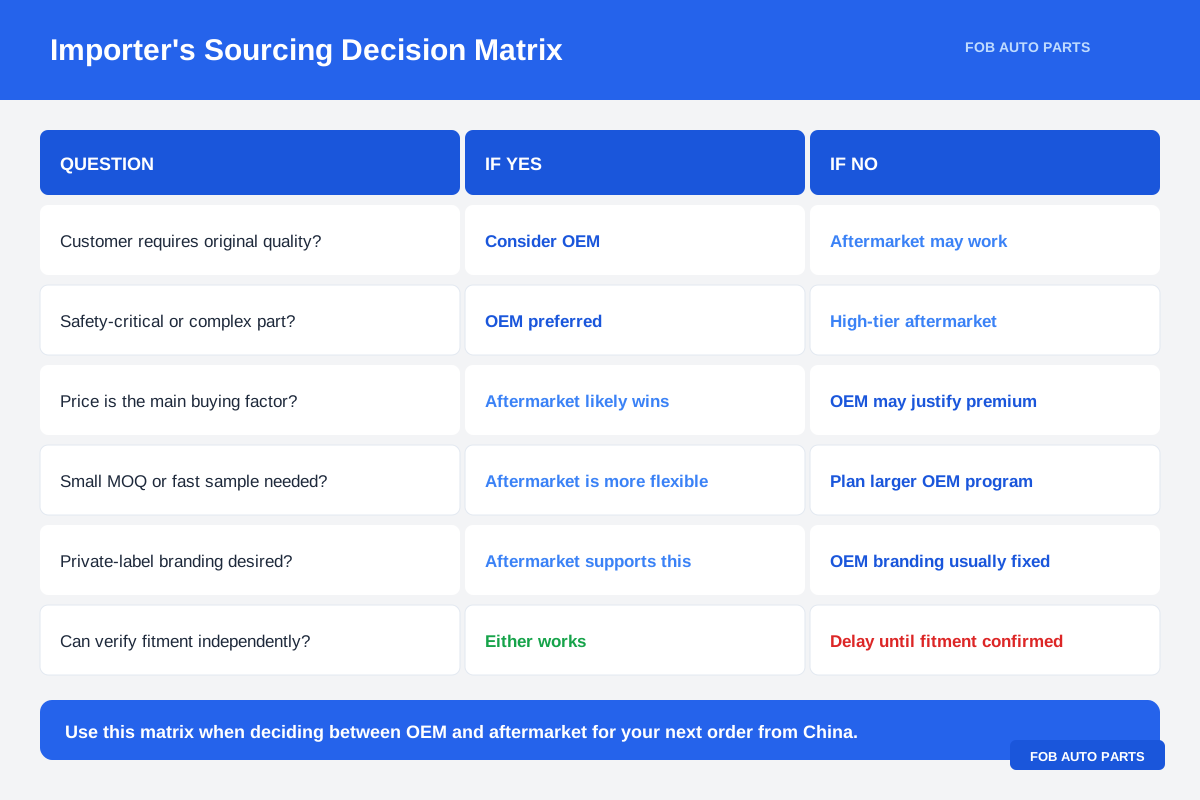
Use this table when deciding between OEM and aftermarket for your next order:
| Question | If Yes → | If No → |
|---|---|---|
| Does my customer require original quality? | Consider OEM | Aftermarket may work |
| Is this a safety-critical part? | OEM preferred | Choose high-tier aftermarket with test reports |
| Is price the main buying factor? | Aftermarket likely wins | OEM may justify premium |
| Do I need small MOQ / fast sample? | Aftermarket is more flexible | Plan larger OEM program |
| Do I want private-label branding? | Aftermarket supports this | OEM branding usually fixed |
| Can I verify fitment independently? | Either works if data is clean | Delay order until fitment is confirmed |
Frequently Asked Questions
Are aftermarket auto parts lower quality than OEM?
Not necessarily. Premium aftermarket parts from Tier 1 manufacturers can match OEM performance. The key is to verify the supplier, certifications, and testing records. Low-cost, unbranded aftermarket parts are usually lower quality and carry more risk.
Can I sell aftermarket parts under my own brand?
Yes. Many aftermarket suppliers offer neutral or private-label packaging. This is common for brake pads, filters, suspension parts, and body parts. Discuss label design, MOQ, and lead time before production.
Is MOQ lower for aftermarket than OEM?
Usually yes. Aftermarket suppliers often accept smaller first orders or mixed-SKU orders. OEM programs typically require larger volumes, especially for branded or specialized parts.
What documentation should I request when importing auto parts?
Ask for the commercial invoice, packing list, bill of lading or airway bill, certificate of origin, and any product certifications such as ISO, CE, or IATF 16949 where applicable. For OEM orders, request OE number lists and traceability documents.
How do I reduce the risk of buying the wrong parts?
Send a clear inquiry with OE numbers, vehicle application, target quantity, and destination market. Request samples for critical parts. Start with a trial order. Work with suppliers who confirm fitment in writing and provide inspection reports.
Source the Right Parts for Your Market
The OEM vs aftermarket decision is not about which is "better" - it is about which fits your customer's expectations, your margin target, and your risk tolerance. Many successful importers stock both: OEM for premium lines and verified aftermarket for volume categories.
If you are deciding between OEM and aftermarket auto parts for your next order, FOB Auto Parts can help. Send us your OE number list, target vehicle applications, quantities, and destination country. We will check compatibility, recommend the right sourcing option, and provide a detailed quotation for your review.
Request a Quotation